One kind of choral singing wins a lot of arguments at the moment. The chords are perfectly tuned, the vowels matched, the consonants together, and the diphthongs tucked neatly away at the last moment. It is admirable, and too often it leaves me unmoved.
I believe singing has to mean more than that. These are some of the principles I work by.
The words come first. Every piece we sing is saying something. What does this word mean at this moment, and how can the audience hear it? Technique matters enormously, but it matters because it serves the meaning. A well-tuned third makes a chord glow on its word, and a vowel is the colour of the word.
Listen past the surface.My favourite example is John McCormack singing “Come, my beloved”, the English version of Care selve from Handel’s Atalanta. At the very end, on “guide me safely to her arms”, he holds a long, suspended top A flat on “arms” and finishes it with the most beautiful liquid R, M and S, so that you can almost feel arms wrapped around you. The whole line has been travelling towards that word, and he lets you arrive in it. Yet when I play that recording to people, many of them hear his Irish accent, and that’s the standard they judge it by. They aren’t listening to the sylvan gloom, the wandering day and night, the gentle zephyrs, or how carefully he treats every one of those words.
The life is in the space between. The safest choral habit is to take out the movement: long vowel, tiny late diphthong, consonant, done. It’s easy to keep together, and it’s how a word dies. A beautifully turned diphthong needs every singer to agree what the word means. That’s harder, and worth it.
Sing like singers – cantabile. When orchestral and piano music is marked “in a singing style”, I think what instrumentalists are asked to imitate isn’t an even, beautiful tone. It’s a line that breathes, shapes towards the important note and gives and takes in its timing like speech. Chopin sent his pupils to hear the great singers to learn phrasing. Instruments were told to sing like singers, but I find many choirs now sound as if they’re trying to sing like instruments: even, blended and perfectly tuned, without the speech-like shaping that made the voice the model.
An image does more than an instruction. I often ask a choir to picture a single phrase. In Lay a Garland it is the line “lay a garland on her hearse”: imagine placing the flowers yourself, on that most sacred spot, for someone you loved. If you can put yourself in that space, the image will tell you more about how to sing the piece than anything else I can say.
How would you feel? I don’t ask singers to act. I ask them to imagine they are truly inside the moment the words describe. Then they shape that feeling with care, holding something back for when it matters.
Meaning lightens the load. I know in a programme like the next Parnham Voices concert Love’s Labour’s Lost one asks a great deal of a voluntary choir, and adding another layer is a real challenge for amateur singers who feel they’re already at the edge of what they can hold. I see my job as motivating them, showing them and proving to them that pretty notes, neat consonants and sweet chords aren’t the whole of what we’re doing. My argument is that meaning reduces load by chunking: one idea (“gently asking the night to come closer”) carries five instructions with it. The text becomes the organising principle that explains the technical demands. The caveat is that this only works once the notes are reasonably secure. The trap is the “notes first, meaning later” sequence, which builds a habit of notes and consonants, so I want meaning there from the first read-through
Let the text lead. If you are truly inside the words and the music, much of the shape, the louds and softs, finds itself.
The composers knew it – words as mistress. Monteverdi’s camp held that the words should be the mistress of the harmony, not its servant. Byrd, in the Gradualia preface, says that for a mind that dwells on the words, the right music seems to arrive of its own accord. Morley tells composers to fit the music to “the nature of the ditty”.
That’s some of it: not a nice noise, but something said.
Hear it for yourself
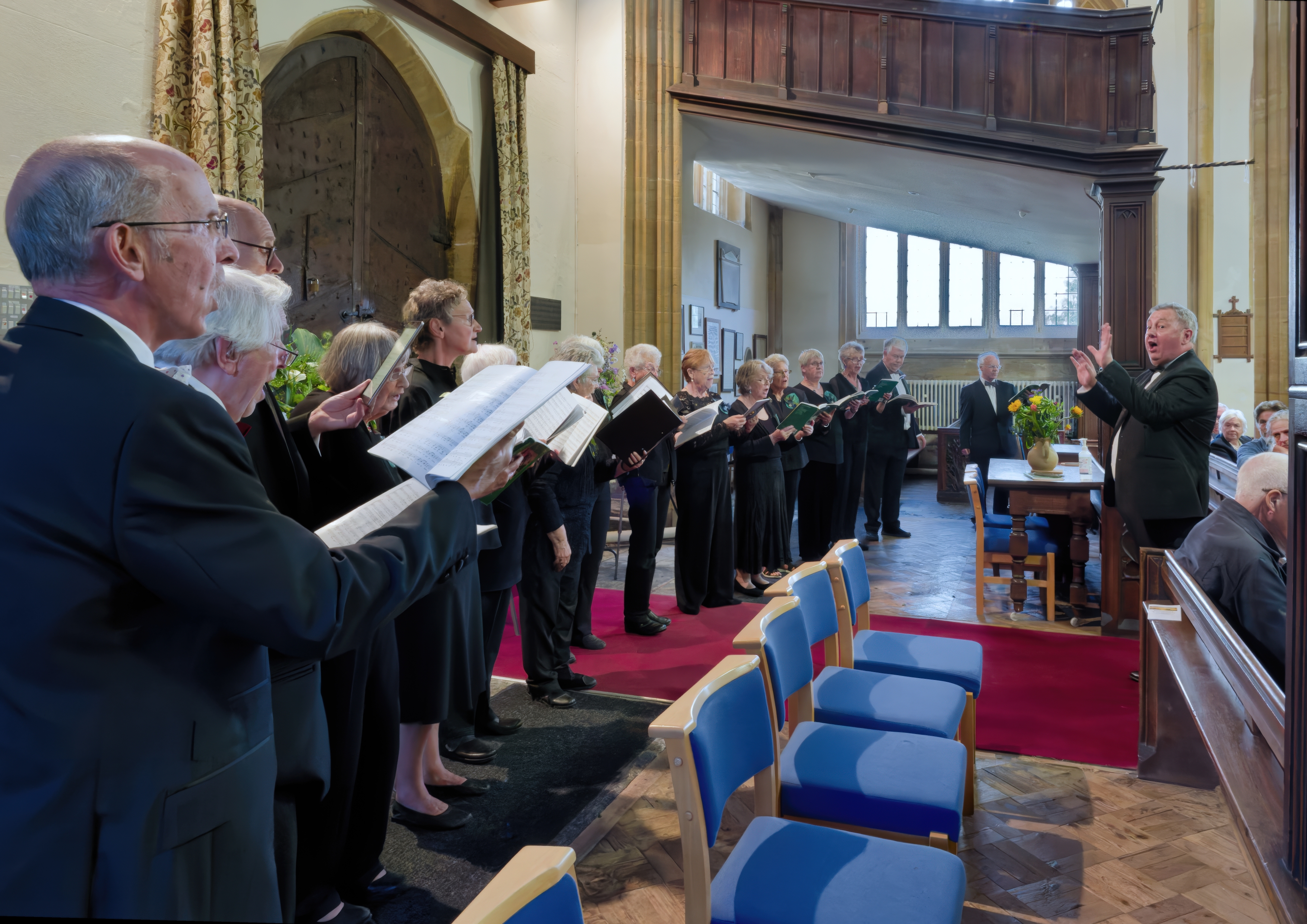
You can hear Parnham Voices next on Saturday 14 November at 7pm at Wyke Regis Parish Church. Details of other concerts are on my forthcoming engagements page, and if there’s something you’d like me to write about, do get in touch.


Leave a Reply